
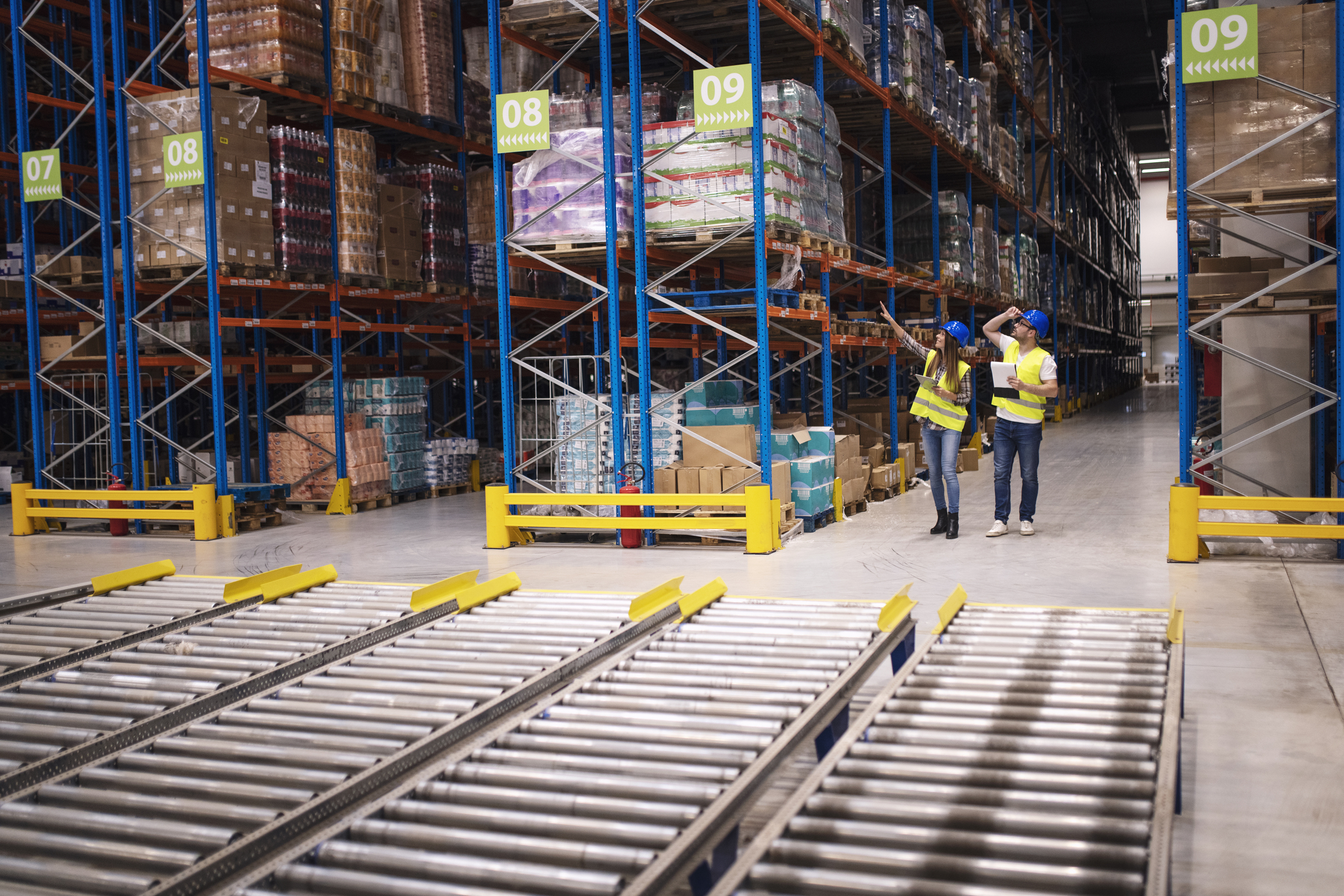
3PL (third-party logistics) means outsourcing storage, order fulfilment and transport to a specialist provider. A 3PL warehouse receives your
stock, stores it, picks and packs orders, and hands them to transport. You pay for the space and work used instead of running your own warehouse, team and systems.
Choosing a 3PL is a bigger decision than choosing a storage unit: the provider effectively becomes your operations team. The checklist below is what we
would ask if we were the customer.
What a 3PL Warehouse Does
- Receiving: checks inbound goods against your purchase order and records them in the WMS.
- Storage: standard, racked or customised bays matched to your products.
- Inventory management: real-time stock levels, cycle counts and reports.
- Order fulfilment: B2B orders and e-commerce orders picked, packed and labelled.
- Value-added services: kitting, labelling, repacking.
- Transport connection: hand-off to couriers, lorries, or air and sea freight.
- Returns: inspection, restocking or disposal.
3PL vs In-House Warehousing
| In-house warehouse | 3PL warehouse | |
|---|---|---|
| Upfront cost | Lease, racking, equipment, WMS | None; pay as you use |
| Staff | Hire, train and manage your own | Provided by the 3PL |
| Flexibility | Fixed space, whether full or empty | Scale up for peaks, down afterwards |
| Control | Direct, day to day | Through SLAs, reports and reviews |
| Best for | Large, stable volumes and specialised processes | SMEs, e-commerce, seasonal or multi-region stock |
10 Questions to Ask Before Choosing a 3PL
- Location: is the warehouse near the ports, highways or customers you serve?
- Coverage: can it store stock in East Malaysia as well as the Peninsula?
- Technology: which WMS is used, and can you see stock in real time?
- Integration: does it connect to your marketplaces or ERP?
- Service levels: what are the order cut-off times and the pick accuracy target?
- Pricing: are storage, handling, picking and admin fees itemised?
- Security: CCTV, access control and patrols?
- Product suitability: can it handle your heavy, fragile, temperature-sensitive or dangerous goods?
- Insurance and liability: who insures stock, and on what value?
- Transport: can it move goods onward by lorry, air or sea without another vendor?
Types of 3PL Services
| Model | What it covers | Typical client |
|---|---|---|
| Storage-led 3PL | Pallet storage, handling in and out | Distributors, manufacturers with bulk stock |
| Fulfilment 3PL | Pick, pack and dispatch of individual orders | E-commerce brands and marketplace sellers |
| Transport-integrated 3PL | Warehousing plus lorry, air and sea freight | Businesses shipping across Peninsular and East Malaysia |
| Value-added 3PL | Kitting, labelling, repacking, quality checks | Brands supplying retailers with specific requirements |
Service Levels (SLAs) to Agree in Writing
| SLA | What to define |
|---|---|
| Receiving | How fast inbound goods are available to sell (dock-to-stock) |
| Order cut-off | Orders received before this time ship the same day |
| Pick accuracy | Target percentage and how errors are credited |
| Inventory accuracy | Target and cycle-count frequency |
| Reporting | Which reports, how often, and in what format |
| Exceptions | How damage, shortages and delays are reported |
How Onboarding with a 3PL Works
- Discovery: share your SKU list, dimensions, volumes, order profile and channels.
- Solution and quotation: storage type, layout, processes and itemised rates.
- Set-up: SKUs loaded into the WMS, barcodes and labels agreed, integrations connected.
- Stock transfer: inventory moved in, counted and put away.
- Go-live: first orders processed with close monitoring.
- Review: monthly KPI reviews against the agreed SLAs.
One Warehouse or Two? Serving Both Peninsular and East Malaysia
A single warehouse in the Klang Valley is the simplest set-up, but every East Malaysian order then rides 2 to 3 weeks of sea freight or costly air
freight. Splitting stock, with bulk in Klang and fast movers in Kuching or Kota Kinabalu, shortens delivery to Borneo customers and turns sea freight into
planned replenishment instead of order-by-order shipping. Choose a 3PL that operates on both sides if East Malaysia is a meaningful market.
If you decide on a second site, our guide to warehousing in Kuching, Kota Kinabalu and Miri covers location, stock levels and replenishment.
Red Flags When Evaluating 3PLs
- Single bundled price with no breakdown of fees
- No access to real-time stock data
- No written service levels for accuracy and dispatch times
- Reluctance to show you the facility
How De Hubs Works as a 3PL
De Hubs provides storage, inventory management, order and e-commerce fulfilment for Shopee, Lazada and TikTok Shop, kitting, labelling and onward
transport, from warehouses in Klang, Kuching, Miri and Kota Kinabalu. Facilities have 24/7 CCTV and access control, and stock is tracked in a real-time WMS.
Learn more about our 3PL warehousing in Malaysia, or see how warehousing fees work.
Frequently Asked Questions
What does 3PL mean?
3PL stands for third-party logistics: outsourcing warehousing, fulfilment and transport to a specialist provider. The 3PL receives, stores, picks, packs and dispatches your goods, so you do not need your own warehouse, staff or systems.
What is the difference between 3PL and 4PL?
A 3PL performs the physical logistics work: storage, fulfilment and transport. A 4PL manages the whole supply chain on your behalf, often coordinating several 3PLs and carriers without operating warehouses itself.
When should a business switch to a 3PL?
Common triggers are running out of space, frequent picking errors, rising staff costs, expanding into new regions such as East Malaysia, or e-commerce growth that your team can no longer fulfil on time.
What should a 3PL contract include?
Clear rates for storage, handling, picking and value-added services; service levels such as order cut-off times and pick accuracy; reporting; liability and insurance terms; and the notice period and exit process.